There are people with a special light and sensitivity that they transmit every day through their words, their eyes, and their work. This is Bibi García, the Sevillian winemaker who has been behind the wines of Cortijo de los Aguilares for over a decade.
After admiring and drinking her wines for a long time, last December I finally had the opportunity to pay her a visit in her refuge in Ronda. “I just returned from a super inspiring trip to Burgundy with good friends in the industry,” she told me. It also served as therapy for a very difficult personal grieving process for her: the death of her brother.
After studying Chemistry and completing a Master’s degree in Viticulture in Madrid, she worked as a winemaker at Remírez de Ganuza and in Priorat before returning to her native Andalusia. The goal was to take charge of the dream of José Antonio Itarte, who bought the estate in 1999 to start a new life in southern Spain. He planted 17 hectares of tempranillo and french varieties: some cabernet Sauvignon, petit Verdot, and pinot noir. Pinot noir is the variety that has brought fame to the winery.
However, the reality of climate change forced Bibi to seek new land for new vineyards. This was a task she carried out slowly and carefully. From this search would come her garnacha and graciano wines. And Breñal, the winery’s only white wine, whose label reproduces the Sierra de Grazalema mountain range silhouette.
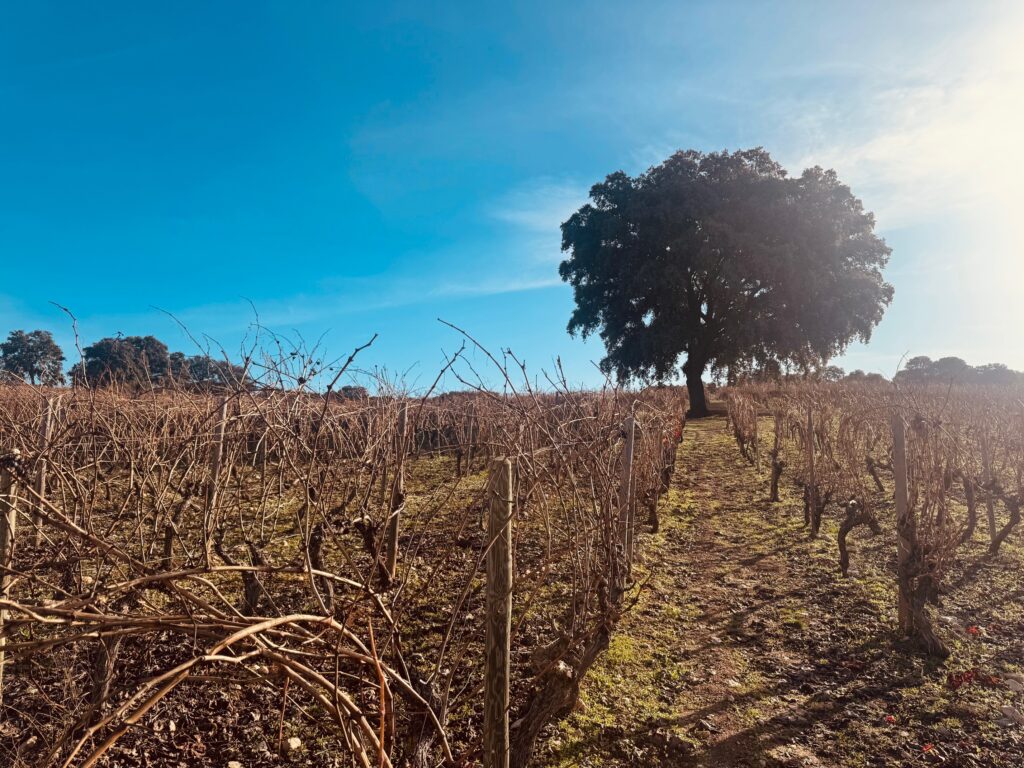
La encina vineyard
Ronda wines
Cortijo los Aguilares was a pioneer winery in the recovery of native vineyards in Ronda. But the first was Alfonso de Hohenlohe at Cortijo Las Monjas in the 1980s, whose 15 hectares of vineyards are also currently managed by Bibi García nowadays.
The first vineyards were planted by the Phoenicians, and their cultivation was promoted by the Romans. But phylloxera wiped them off the map in the 19th century. Poor decisions ultimately doomed the area, as rootstocks incapable of withstanding the colder, more continental climate of the Málaga mountains were chosen.
Today, more than 20 wineries have rewritten history with a different philosophy under the Sierras de Málaga designation. While fortified wines predominated before phylloxera, today there is a great diversity of grapes and styles that benefit from a Mediterranean climate, but with that Atlantic touch imparted by the mountains and the altitude. This gives them a very special acidity, fresh yet ripe.
In fact, the profile of visitors who come to Cortijo los Aguilares is very international. It should not be forgotten that Ronda has a long tourist tradition dating back to the 19th century, as it was on the route between Granada and Seville traveled by the intellectuals and explorers of the time.
However, as the winery’s oenologist acknowledges, “there’s still a bit of a disconnection between the world of wine and local culture, perhaps because the return to wine production is relatively recent here.”
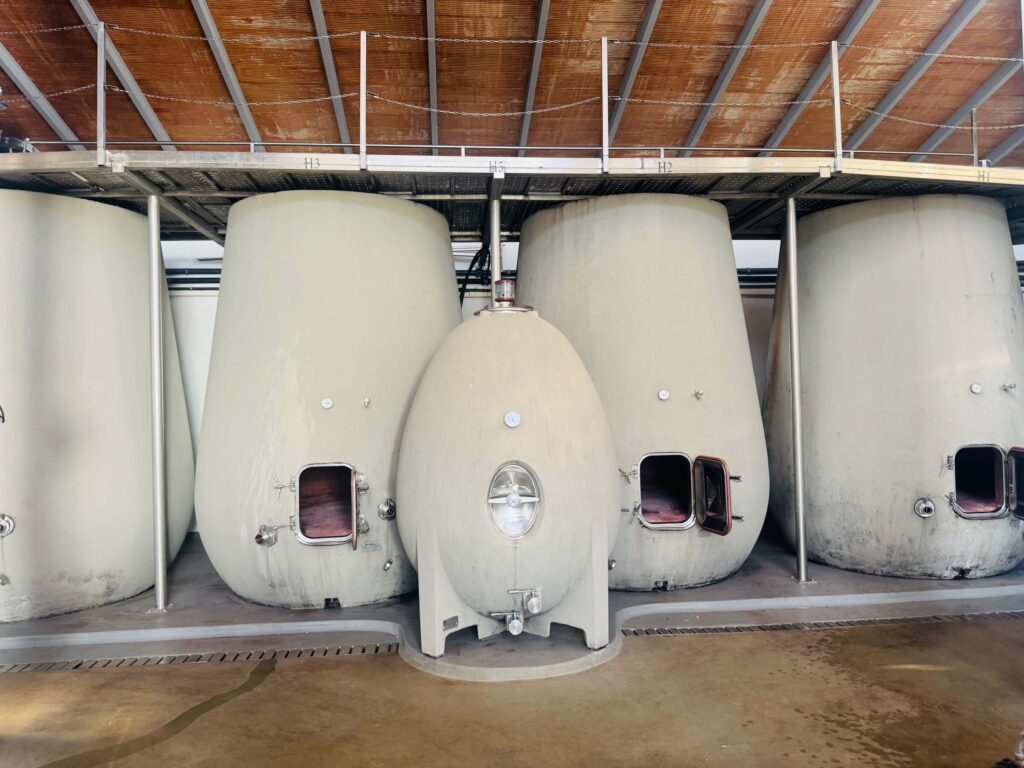
Concrete tanks in the winery
Pinot Noir and Petit Verdot
The winery’s only plot of pinot noir is located in La Encina. It was a personal whim of José Antonio Itarte, who grew up in Switzerland and was accustomed to that style of wine. But “we can’t forget that Africa is just 100 kilometers away,” Bibi García explains. “You can manage the terroir and the soil, but you can’t change it. We can’t be Burgundy. Our pinot noir is a very beautiful wine, but it’s not a great wine. It’s a wine made from the heart. And even so, there have been years when I’ve considered not doing it because I wasn’t 100% happy with the result,” she says. “There have been vintages where we haven’t produced pinot noir because we couldn’t achieve the balance and coherence, I always strive for in all my wines. Fortunately, the 2025 vintage is shaping up very well.”
To achieve the balance and elegance that has made her pinot noir one of the best in Spain, Bibi harvests in two separate moments. The first harvest is very intense, acidic, and fresh, which she handles in a very specific way. The second takes place eight or nine days later, with riper grapes and more body.
For this reason, this vineyard is treated like a botanical garden, as Aitor Azpitarte, head of wine tourism at Cortijo los Aguilares, explains. “We take much better care of the foliage and shade, and we always do very careful manual pruning. We only irrigate a little by drip irrigation if there’s a heat wave,” he adds.
Petit verdot is another of her signature grapes. It forms the backbone of her Pago del Espino, in addition to a blend of tempranillo, syrah, and garnacha. Then it evolves 15 months in oak barrels. Bibi confesses that it’s one of her favorite wines from the winery. So much so that it accompanied her on her wedding day.
Tadeo and Tadeo Tinaja are their single-varietal petit verdot wines. “I’m aware that their body and structure aren’t what’s fashionable now, but it’s what the variety and the climate demand. If I harvest two weeks earlier, it gives me less alcohol and more acidity. Less balance.”
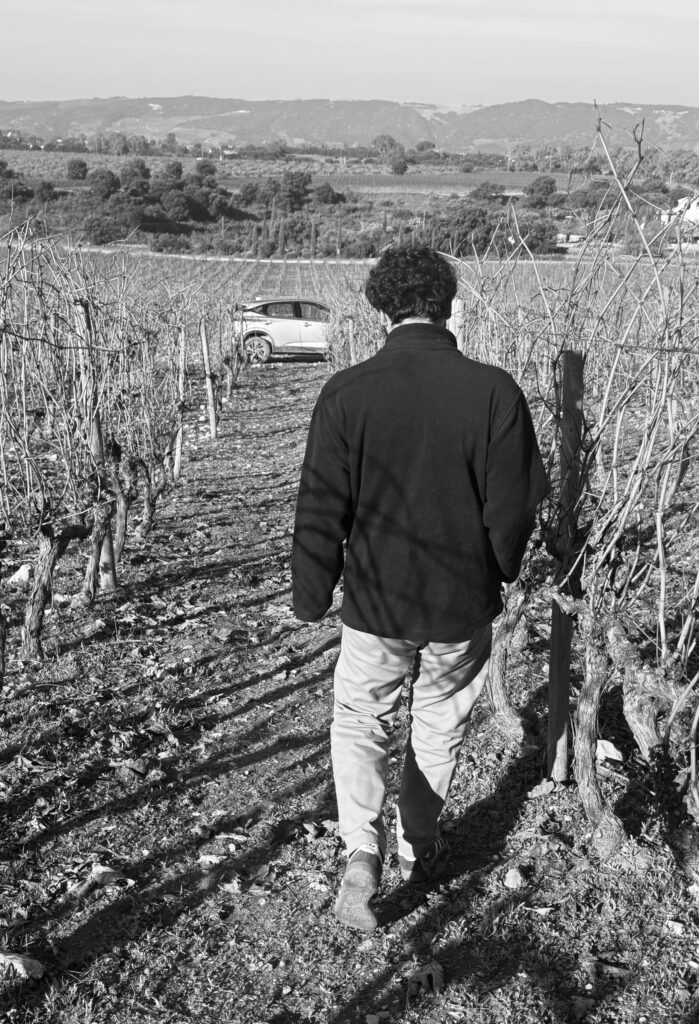
Aitor Azpitarte walking through the vineyards
Wines, trends, and identity
The trend of somewhat forced high acidity in many Spanish wines, which are essentially Mediterranean, is a hot potato that should be debated. “Now everyone wants to make wines like in Madeira. Everything is Atlantic. And even in Ribera del Duero, we’re Mediterranean,” explains Bibi. “And you certainly can’t do that in Jumilla. Yes, you can harvest earlier, but sometimes the grapes have barely finished their veraison. It doesn’t make sense at all.”
The winemaker recalls the other extreme of the pendulum when she started working at Remírez de Ganuza in 2002. “It was the Parker era, when hyper-extraction and hyper-concentration were super trendy. Some wineries were doing double passes through the winery to achieve the profile that was popular at the time.”
For her, it’s a matter of insecurity that Spanish wine can’t seem to shake off. “In Germany and France, they’re more stable and consistent in that regard. We go wherever the music plays. And in doing so, we lose our identity.”
It’s also true that certain gurus have insisted on a style of wine that not everyone can produce due to climate and region. And giving up on proper ripeness seems like a real shame to me. I want my wines to smell of their origin. Of mountainous Andalusia, with cool, high-altitude nights. With scrubland and balsamic notes. But they also have to be at their precise moment of maturity.”