Wines of Madrid: wineries, varieties and regions worth discovering
Madrid seems to have the virtue – or perhaps the flaw – of making almost everything happen within the city. Restaurants, markets, chefs, endless bars and a gastronomic calendar capable of filling several lifetimes. Yet it only takes a few dozen kilometres away from the centre to discover another Madrid. One where the landscape changes, vines appear and wine stops being merely something served at a table to return to its origin.
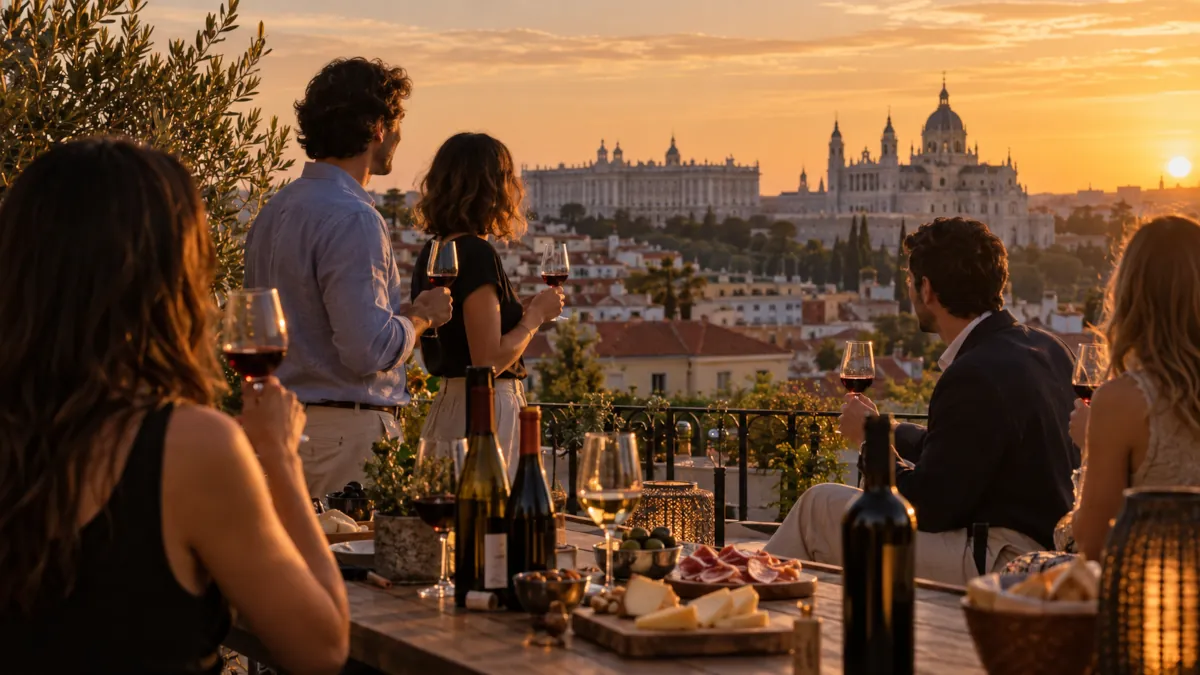
Because Madrid is also vineyard country. And not just one kind.
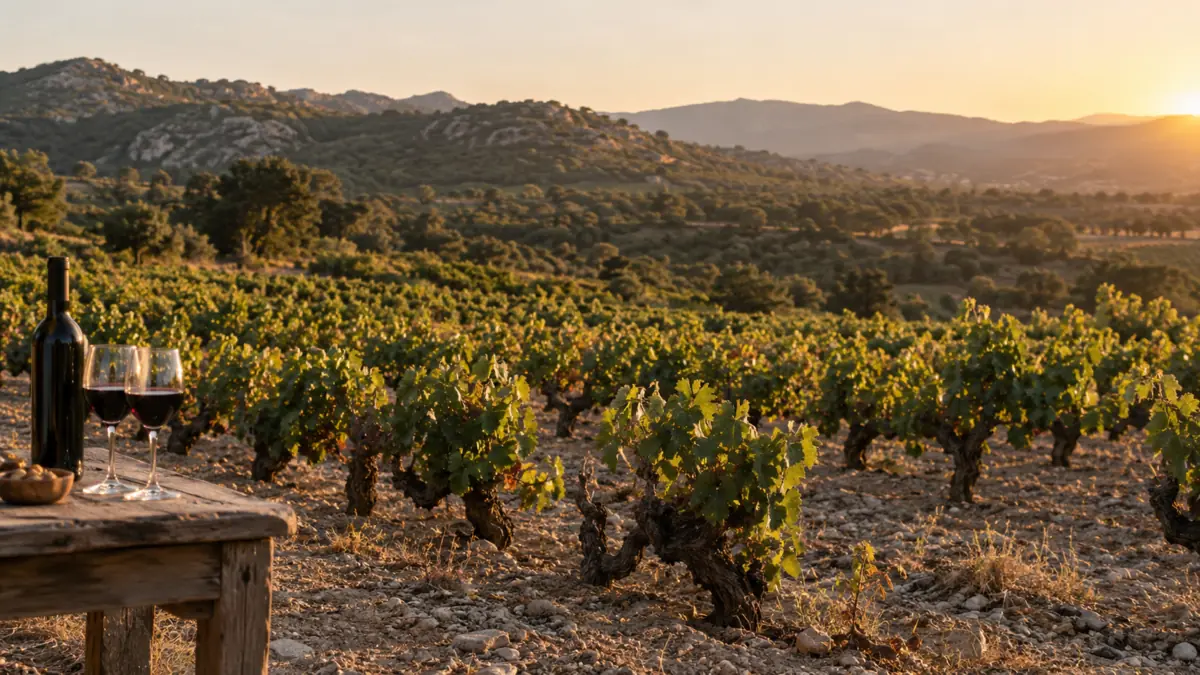
Wines of Madrid are born in landscapes that are very different from one another: from the limestone soils and plains of Arganda to the granite and slopes near Gredos, via Navalcarnero and the vineyards in the north of the region around El Molar.
Four regions. Different soils, different altitudes and very different ways of interpreting the same varieties.
Wines of Madrid: four landscapes within one denomination
As mentioned above, the DO Vinos de Madrid is currently structured into four sub-regions: Arganda, Navalcarnero, San Martín de Valdeiglesias and El Molar. Each responds to very different geological and climatic conditions, particularly important in a region where vineyards can lie between approximately 480 and 1,000 metres above sea level.
It is hard to imagine a single wine style amid such diversity.
In the south-east, Arganda looks out over drier landscapes, with sedimentary soils and a notable presence of limestone and marl. To the west, San Martín de Valdeiglesias enters the granite territory of the Sierra de Gredos. Navalcarnero sits on soils of siliceous origin with sandier textures, while El Molar adds a particularly varied geological mosaic in the north of the region.
The conclusion seems simple. To speak of Madrid wines as though they were one single thing would mean missing precisely what is best about them.
Arganda: where Madrid becomes more Castilian
Arganda is the denomination’s great wine-growing expanse. Here the landscape opens up. Gentle hills, plateaus and fertile plains replace the mountains, and the vineyard meets a drier, more continental climate.
The soils often have high limestone content and loamy or clay-loam textures, and the area experiences significant temperature swings.
It is also the sub-region with the greatest productive weight within the denomination. In the 2023 harvest, it accounted for approximately 71% of the grapes delivered to member wineries.
In this part of Madrid we find white varieties such as malvar and airén, alongside red varieties such as tempranillo and others authorised by the denomination. These wines are born in an apparently austere environment, where heat and dryness force the vine to manage its resources very carefully.
It does not seem the kindest of places. And yet the vineyard has been there for a long time.
San Martín de Valdeiglesias: the other side of garnacha
If there is an area that has changed the way many wine lovers view Madrid wines today, it is probably San Martín de Valdeiglesias.
Here we enter the easternmost slopes of the Sierra de Gredos. Granite replaces limestone. Hillsides and foothills appear, along with vineyards at higher altitudes. The soils are mainly sandy-loam and acidic, very different from those found at the other end of the denomination.
And upon them appears an inevitable leading character: Madrid garnacha.
Old vines, often grown on small plots that are difficult to mechanise, have shown that this variety can be far more delicate than was thought for years.
Red fruit, flowers, herbs, minerality and a freshness that surprises anyone who still expects heavy, overly ripe garnachas.
The landscape is in charge. And here it is very much in charge.
It is no surprise that some of the Madrid projects that have sparked the most interest in recent years have turned their attention back to these old vines and to less interventionist viticulture.
And sometimes modernity consists precisely in recovering what was already there.
Navalcarnero: a history written in sand and tradition
Navalcarnero has historically been closely linked to wine. Its soils, shaped by the action of the Guadarrama River, are mainly siliceous and sandy-loam in texture. The climate is dry once again, but the landscape changes compared with Arganda, and so does the way the vine expresses itself.
Here garnacha once more takes centre stage among red varieties, while malvar occupies a prominent place among whites.
For decades, this area was associated with a more everyday way of drinking wine, linked to taverns and local consumption.
Perhaps that is why it has something especially interesting. It does not need to invent a tradition, because it already has one.
The challenge is to reinterpret it without turning it into a museum piece.
El Molar: the north exists too
For a long time, speaking about the denomination meant thinking only of three main sub-regions. El Molar changed that map.
Located in the north of the region, this fourth sub-region added eleven municipalities and brought a new geography to Madrid wines as a whole.
It is possibly the most heterogeneous in terms of soils: granite, quartzite, slate, schist, gneiss, sandstone, marl and limestone all appear within its territory. A small geological encyclopaedia.
Here, garnacha tinta and malvar once again appear as particularly representative varieties.
And there is something stimulating about this more recent addition: it reminds us that even a denomination with decades of history can continue to redefine its boundaries and discover new voices within its own territory.
Garnacha, malvar, albillo real and other varieties that explain Madrid
Speaking about Madrid grape varieties means returning to the territory once again, since they do not all have the same importance in every area.
In San Martín de Valdeiglesias, the main varieties are garnacha tinta and albillo real. In Navalcarnero and El Molar, garnacha and malvar stand out in particular.
Arganda broadens the range even further and reflects that other wine-growing identity more closely connected to the plateau and its traditional varieties.
Among them all, garnacha has probably become the variety that has done most to renew the external image of Madrid wine. But it would be unfair to stop there.
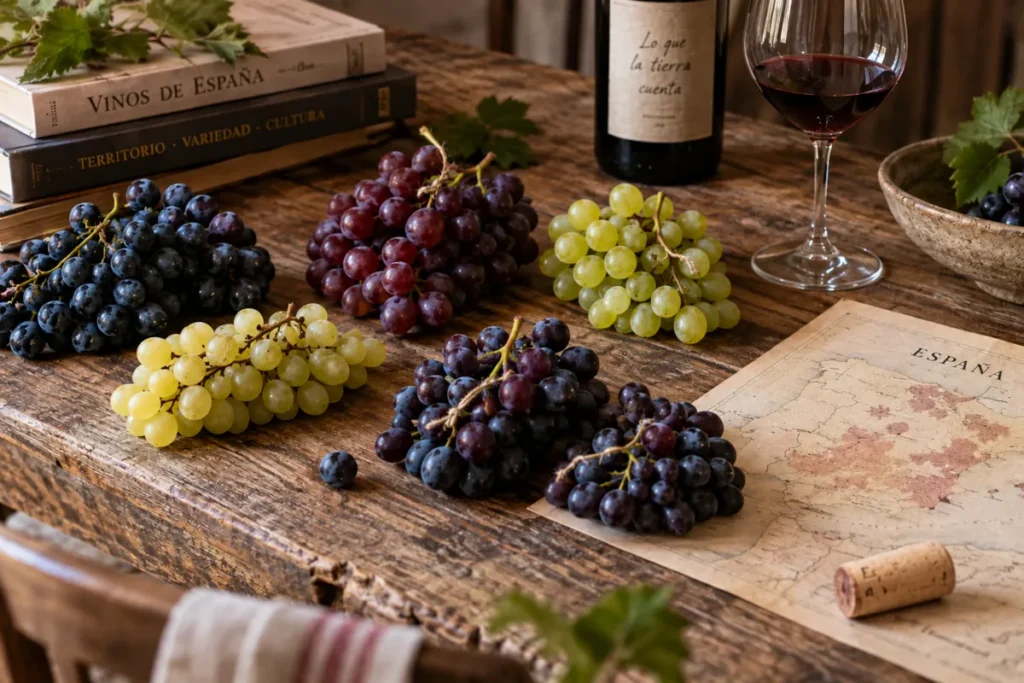
Albillo real can offer textured, characterful whites; malvar is part of the region’s traditional wine-growing heritage, while varieties such as tempranillo and airén complete a landscape far more complex than it appears.
Madrid has more grapes than many people imagine. And more stories behind them.
Madrid wineries: when the project begins in the vineyard
A denomination can have rules, regulatory councils and promotional strategies, but in the end it is people who build its identity.
Madrid wineries have been undergoing an interesting transformation for years. Historic cooperatives, family projects and small producers coexist with those who have returned to old plots, challenging vineyards and varieties that for a time seemed destined to lose importance.
Some seek precision. Others, identity. Others simply want wine to speak once again of the place it comes from. And in many cases, that change begins before it reaches the winery: in the vineyard, in pruning, in the decision to keep a plot that may not be the most profitable, in respecting a minority variety or in choosing not to pull up an old vine.
They are small decisions, but they build the landscape.
2026: greater visibility for Madrid wine
This year, the Regulatory Council itself has again focused on one of the sector’s major outstanding challenges: giving the region’s wines greater visibility.
During the first half of 2026, the DO strengthened its presence at trade fairs, professional gatherings, gastronomic initiatives and wine-tourism proposals.
The aim is simple: to ensure that more consumers get to know the wineries and wines made in Madrid.
It is not a minor matter.
Madrid has restaurants, tourism, gastronomy and enormous power to influence. But for a long time, its wines have not occupied the same place in the collective imagination as other Spanish regions.
Perhaps because they were too close, and sometimes we look farther away than necessary.
A summer that reminded us wine is also territory
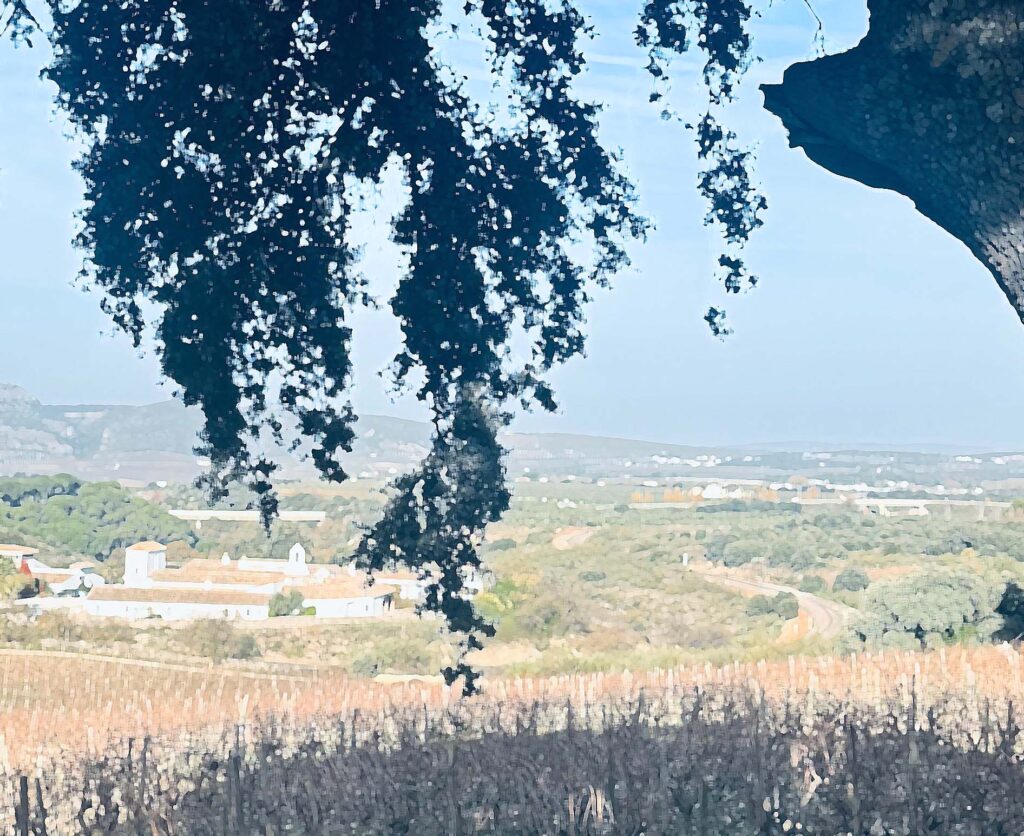
But 2026 has also left a far more difficult image to forget: the summer wildfires that affected the Sierra Oeste and reached wine-growing areas of San Martín de Valdeiglesias.
Suddenly, talking about vineyards ceased to be only about varieties, soils or wine styles. It became about loss. Landscape. Farmers. Wineries. And the fragility of an agricultural heritage that takes decades to build and only hours to be seriously damaged.
The images of the fires offered a painful lesson, but also another that was less obvious: in some places, the vineyards themselves helped slow the spread of the flames. Cultivated plots acted as breaks in the continuity of the forest landscape. In short, a crop that needed protection also ended up protecting the territory around it.
It is deeply paradoxical and symbolic.
The Sierra Oeste after the fires
After the fires, support campaigns for the sector and measures to assist affected wineries and growers were activated, but there are damages that cannot be resolved from one year to the next.
An old vine cannot be replaced in the way a machine is changed. It needs time: years to take root, find balance and produce grapes again that can precisely express the landscape they come from.
That is why, when we talk about Madrid garnacha and the old vineyards of San Martín de Valdeiglesias, we are also talking about heritage. Heritage that, once it disappears, does not always return.
Drinking can also be a way to support
All this adds another perspective to Madrid wines, especially those from the Sierra Oeste. Buying a bottle from a small local winery, visiting a vineyard or taking the time to learn about its projects is no longer only a gastronomic experience. It is also a way of helping that landscape stay alive.
Because behind every bottle there is much more than wine. There is a plot, a family, a decision to keep cultivating… And, very often, a particular way of understanding the territory.
A vineyard hidden in plain sight
Madrid does not need to resemble Rioja, Ribera del Duero or Rías Baixas to justify its wines. Its value lies elsewhere.
In the closeness between a great capital and vineyards that still preserve old vines. In the contrast between limestone and granite. In varieties that change completely depending on which side of the region they come from.
And in something even more important: the people who continue to care for those plots.
Perhaps this summer has given us one more reason to look towards them.
Drinking a Sierra Oeste wine is not only about discovering a garnacha born on granite or supporting a small winery. It is also about helping an agricultural landscape continue to exist.