Wine and food pairing: how to get it right without turning the table into an exam
Few things are capable of raising as many doubts around a table as a bottle of wine.
The dish has been chosen, the guests are seated, and then the question arises. What should we open?
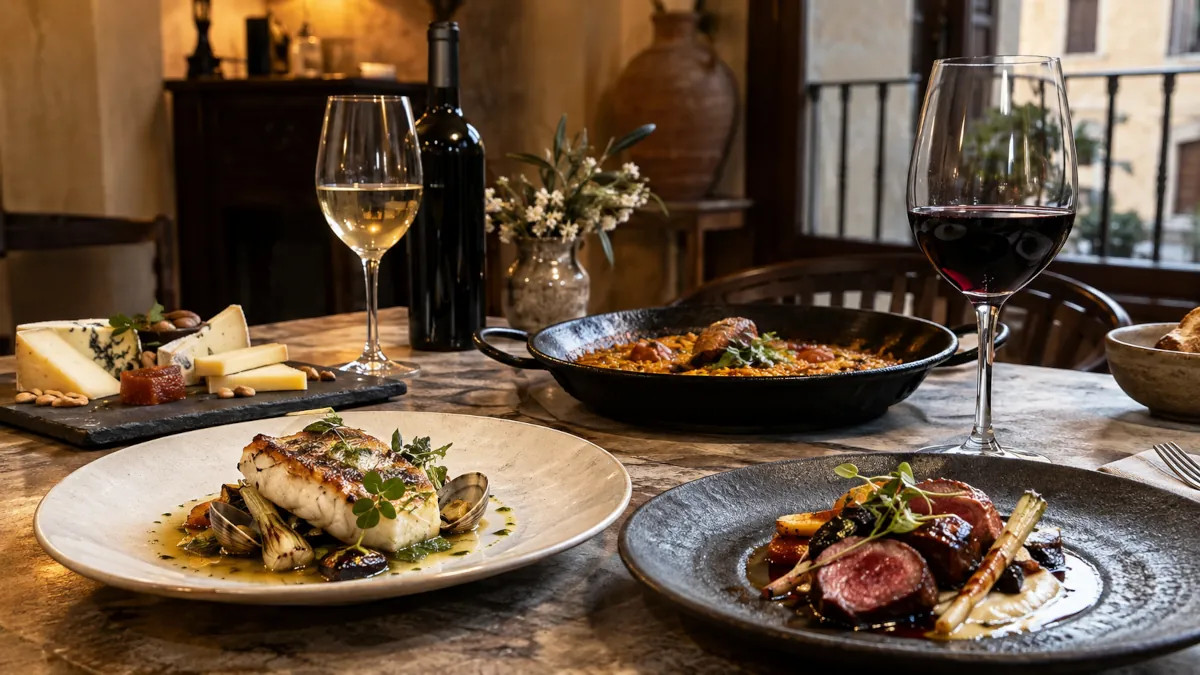
For years, we have been taught that fish calls for white wine, meat demands red, and cheese seems to accept almost anything with a cork. They are convenient rules. They are also dangerously simple.
Because a good wine and food pairing does not depend only on whether there is hake or sirloin in front of us. The sauce, fat, texture, degree of cooking, acidity, spices and even the temperature of the dish all matter. The wine matters, of course, but so does how it is made.
And then there is the part we sometimes forget: personal taste.
Wine and food pairing: more about balance than obedience
Pairing is not about finding a perfect match hidden in some secret manual. It is about getting wine and food to sit together without either of them having to raise its voice too much.
Sometimes the wine accompanies. At other times it contrasts. And on the best occasions, something much harder to explain happens: after a bite, the wine tastes different; after a sip, the dish does too.
That is a good pairing. Not necessarily the most sophisticated one, but certainly the most balanced.
To achieve it, it helps to understand a few pairing rules, although it would be better to call them simply clues. In reality, rules that are too rigid tend to last exactly until a dish comes along that disproves them.
Intensity matters more than colour
Probably the first question to ask when thinking about how to pair wine is quite simple: which element is more intense on the plate?
A white fish steamed gently is delicate. But that same fish with a powerful tomato, garlic and spice sauce no longer is.
Likewise, a grilled red meat can have less aromatic complexity than vegetables slowly roasted with smoke, spices and a fermented sauce.
That is why, rather than setting “white against red”, it is better to think of a balance. Delicate dishes need wines that can accompany them without overwhelming them. Intense dishes need wines with enough structure not to disappear after the first bite.
Everything in life needs balance.
Fat calls out for freshness
Fat has a wonderful quality: it carries flavour. But it also has a less poetic one: it can saturate the palate. That is why rich dishes often benefit from wines with good acidity, tannins or even some effervescence.
Think of a mature cheese, cured meat or meat with an unctuous sauce. A fresh wine can cleanse the mouth and prepare the palate for the next bite.
Contrast works.
A dry sparkling wine with fried food, for example, can be far more interesting than some pairings traditionally considered more noble.
The bubbles cleanse and the acidity refreshes. And the diner appreciates it.
Wine for meat: it does not always have to be a big red
Here we find one of the most deeply rooted associations: meat equals red wine.
On paper, it makes sense. Red meats, particularly when fatty or cooked over embers, work very well with structured red wines whose tannins can stand up to their intensity.
But not all meats are alike. A long, concentrated stew does not call for the same thing as carpaccio. Roast lamb has little in common with spiced chicken. And white meat can be perfectly comfortable alongside a full-bodied white, a wine aged on its lees or, why not, a food-friendly rosé.
When looking for wine for meat, it is best to consider how it has been cooked first.
Grilling brings toasted notes and smoke. Stews add concentration. Sweet sauces change the whole picture. And very often, the accompaniment has more influence on the pairing than the protein at the centre of the plate.
Wine for fish: the end of an old prohibition
Few gastronomic dogmas have lasted as long as the idea that fish should never be served with red wine. Today we know that old rule contained far less absolute truth than it seemed to.
A delicate white fish still finds excellent companions among fresh, mineral whites. But think of seared grilled tuna, bonito or perhaps a caldeirada stew… These are fish with fat and character that a light, fresh, low-tannin red can accompany perfectly.
The key to wine for fish is once again intensity. It also means avoiding wines that are too tannic when the dish contains elements that can amplify metallic or bitter sensations.
There is no need to fear colour; it is better to pay closer attention to structure.
Pairing with cheese: the territory where rules become complicated
Perhaps no food demonstrates better how little use absolute terms are.
“Wine with cheese” seems an unquestionable pairing until we put a fresh cheese, a blue cheese, a goat’s cheese and one aged for two years on the table.
Should we really serve them all with the same wine?
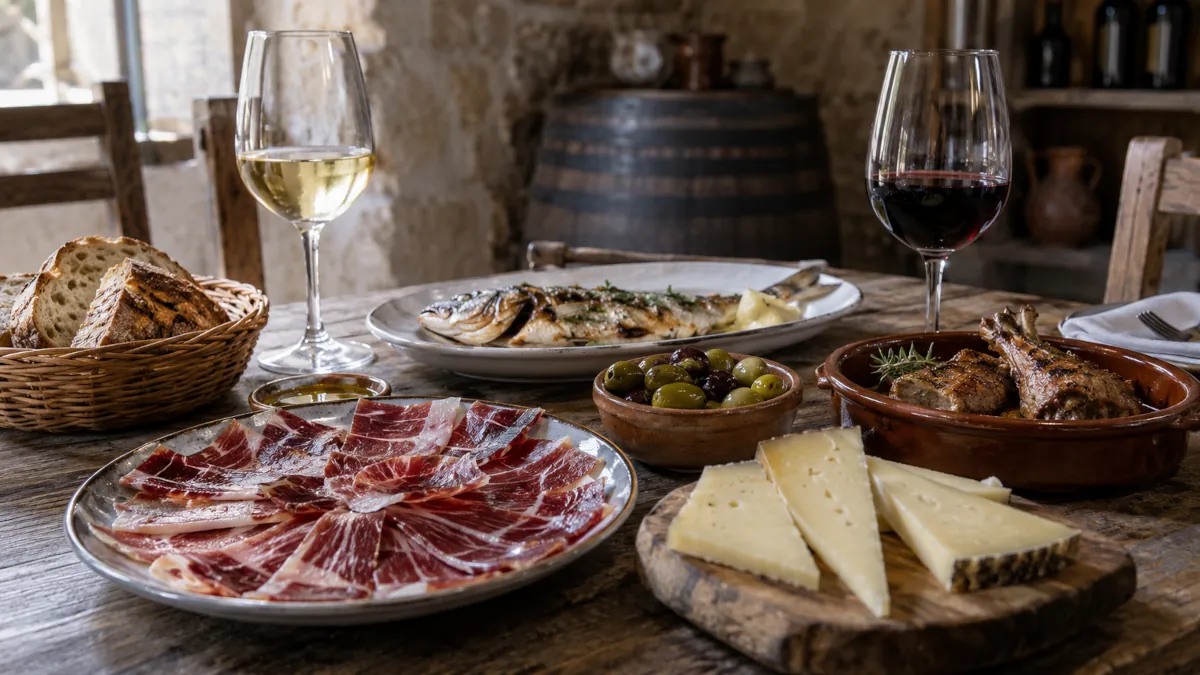
Cheese pairing depends on ageing, intensity, fat, acidity and texture. Fresh cheeses usually appreciate wines that are also fresh and high in acidity. Aged cheeses allow wines with more body and complexity. And blue cheeses present one of the table’s most interesting contrasts: their saltiness and power work especially well with sweet wines.
It may seem contradictory, but that is precisely why it works. The sweetness softens the salty intensity of the cheese and creates a balance that no rule based simply on “red with cheese” could explain.
Sweet food has rules of its own
Desserts are dangerous territory.
A dry wine alongside a very sweet dessert can become completely lost.
As a general rule, the wine should have a level of sweetness similar to or greater than that of the dish, though even here there are nuances.
Chocolate, fruit, cream, nuts and caramel call for different paths. Bitter dark chocolate is not the same as lemon tart. The former seeks depth; the latter needs freshness.
Once again, the dish is in charge.
Spice, heat and the moment when wine makes things worse
Not all wines put out fires. Some feed them.
With very spicy food, a wine high in alcohol and tannin can intensify the sensation of heat even further. By contrast, an aromatic, fresh white with a touch of sweetness can provide a counterpoint.
Asian cuisines are a wonderful playground for seeing this in action.
Ginger, chilli, coriander, curry, fermented ingredients and sweet sauces introduce so many stimuli that thinking only about the protein in the dish no longer makes sense.
Here, aroma matters a great deal. And freshness even more.
Some pairing rules that are worth remembering
After taking apart quite a few of them, it may be worth keeping some. Not as commandments, but as a compass.
Look for similar intensity
A delicate dish usually appreciates a delicate wine, while a powerful dish needs a wine capable of standing its ground.
Use acidity to refresh
Wines with good acidity work especially well with rich dishes, fried foods, sauces and foods that need the palate cleansed.
Be careful with tannin
Tannins work wonderfully with protein and fat, but can become complicated with certain fish, bitter dishes or very spicy preparations.
Think about the sauce first
Very often the real star of a pairing is not the protein, but what accompanies it. A sauce can transform a dish completely and determine which bottle to open.
Do not forget where it comes from
Some combinations have worked for generations for a reason. Wines and products from the same area often share culinary culture, climate and tradition. It is not a guarantee, but it is an excellent starting point.
Does the perfect pairing exist?
Probably not. And perhaps that is good news, because if there were a perfect combination for every dish, drinking wine would be a much more boring activity.
Part of the pleasure lies precisely in trying and getting it wrong. Discovering that a full-bodied white works where we expected a red. Opening a sparkling wine with a meal that seems anything but formal. Or finding that the bottle we saved for an important occasion is much more enjoyable with a simple dish.
Wine and food pairing should not turn the table into an exam. It should make it more interesting.
Rules help us understand why certain combinations work, but from there come taste, curiosity and the desire to experiment.